


Breathwork for Anxiety and Stress: Yogic Breathing Techniques That Actually Work

Your mind feels exhausted, but it still refuses to slow down.
You try to sleep, but thoughts keep running.
You feel stressed during work calls, overwhelmed in crowded spaces, or mentally drained after a long day. Sometimes your chest feels tight for no clear reason. Sometimes your breathing becomes shallow without you even noticing it.
This is exactly why more people today search for breathwork for anxiety, breathwork for stress, and natural ways to calm the nervous system without relying only on temporary solutions.
According to the World Health Organization, 1 in 7 people is fighting a mental disorder globally. Modern lifestyles keep the body in a constant state of stimulation. Endless screen time, lack of rest, emotional pressure, social media overload, poor sleep, and work stress all affect the nervous system. Over time, your body may remain stuck in “fight or flight” mode, where stress feels normal even when there is no immediate danger.
That is where yogic breathing techniques and pranayama become powerful.
Your breath directly affects
Heart rate
Stress response
Emotional regulation
Focus
Sleep quality
Nervous system balance
And unlike many wellness tools, your breath is available to you every moment of the day.
This guide will help you understand:
What Is Breathwork and Why Does It Help Anxiety?
Most people never think about how they breathe.
Breathing happens automatically, so it often goes unnoticed until stress enters the picture.
When anxiety rises, breathing usually changes immediately. It becomes faster, shallower, tighter, or irregular. You may start breathing more through the chest instead of the diaphragm, and your body begins reacting as if it is under threat.
This is why breathwork for mental health has become such an important topic in both yoga and modern wellness practices.
Breathwork simply means consciously controlling or guiding the breath to influence your mental, emotional, and physical state.
That may sound simple, but the effects can be surprisingly powerful.
Unlike quick distractions that only temporarily shift attention away from stress, breathwork works directly with the nervous system itself.
The Science Behind Breath and the Nervous System
Your nervous system constantly scans your environment for safety or stress.
When your body senses pressure, fear, overwhelm, or anxiety, it activates the sympathetic nervous system, often known as the “fight or flight” response.
This can lead to:
Rapid breathing
Increased heart rate
Muscle tension
Restlessness
Racing thoughts
Increased cortisol production
Over time, chronic stress may keep your body trapped in this activated state. This is where slow breathing becomes important.
Research published through the National Library of Medicine suggests that controlled slow breathing practices may positively influence emotional regulation, stress reduction, and autonomic nervous system balance.
Slow breathing activates the parasympathetic nervous system, which is associated with rest, recovery, and relaxation.
This is why people increasingly search for:
breathing for nervous system regulation
breathing to lower cortisol
calming breathing techniques
breathing exercises for mental health
Because these practices can genuinely help shift how the body responds to stress.
How Breath Influences Anxiety
When your breathing slows down:
Heart rate may decrease
Muscle tension may reduce
Mental overstimulation may settle
Emotional reactions may feel less intense
This creates what many experts call the “relaxation response.” And this is exactly why yogic breathwork has remained relevant for centuries.
Yogic Breathing vs Modern Breathing Techniques
Many modern breathing exercises are actually rooted in ancient yogic principles. Today, techniques like:
Box breathing
Coherent breathing
Deep diaphragmatic breathing
are widely recommended by wellness experts, therapists, athletes, and mindfulness coaches. But yogic traditions practiced structured breath control long before modern wellness trends existed.
What is pranayama?
In yoga philosophy, pranayama refers to conscious breath regulation practices designed to balance energy, awareness, and mental state.
Traditional pranayama breathing techniques focus on:
Controlled inhalation
Controlled exhalation
Breath retention
Rhythm and awareness
Unlike casual deep breathing, pranayama combines mindfulness, posture, concentration, and breath together. That deeper connection is one reason why practices like:
Pranayama for anxiety
Pranayama for stress
Yoga breathing techniques benefits
Continue gaining popularity globally.

Best Yogic Breathing Techniques for Anxiety and Stress Relief
Not every breathing technique works in the same way.
Some practices calm the mind quickly.
Some help with emotional balance.
Some improve focus and grounding.
Others support better sleep and relaxation.
The key is understanding which method works best for your specific situation. Below are some of the most effective breathing techniques for anxiety and stress relief that continue to be widely practiced in both yoga and modern wellness spaces.
Anulom Vilom (Alternate Nostril Breathing)
Among all yogic breathing techniques, Anulom Vilom is one of the most beginner-friendly and widely practiced methods for mental balance and calmness.
It is simple to learn, gentle on the nervous system, and highly effective when practiced consistently.
What Is Anulom Vilom?
Anulom Vilom is a breathing technique where you inhale through one nostril and exhale through the other in a rhythmic pattern.
This practice is often connected with balancing energy channels and calming mental overstimulation. People frequently search for alternate nostril breathing benefits, how to do anulom vilom, and anulom vilom for anxiety because it is known for its calming and balancing effects.
Benefits of Anulom Vilom for Anxiety
A study published in the National Institutes of Health found that pranayama practices may positively influence stress levels and cardiovascular responses.
One reason this technique works well for anxiety is that it naturally slows the breathing rhythm. When your breathing becomes slower and steadier, your nervous system often begins responding similarly.
Regular practice may help:
Reduce mental restlessness
Improve emotional balance
Calm racing thoughts
Support focus and mindfulness
Improve breath awareness
Many people also practice it before sleep because it creates a calming transition from overstimulation to relaxation.
How to Do Anulom Vilom Step by Step

Step 1: Sit Comfortably
Choose a quiet place where you can sit with a relaxed but upright posture.
Step 2: Relax the Breath
Do not force deep breathing immediately. Begin naturally.
Step 3: Close the Right Nostril
Use your thumb gently.
Step 4: Inhale Through the Left Nostril
Take a slow and steady inhale.
Step 5: Switch Sides
Close the left nostril and exhale slowly through the right.
Step 6: Repeat the Pattern
Continue for 5-10 minutes slowly.
Beginners often make the mistake of trying to breathe too aggressively. But this practice works best when the breath feels smooth and relaxed rather than forced.
When Should You Practice It?
This technique works particularly well:
In the morning
Before sleep
During stressful workdays
Before meditation
During emotional overwhelm
Even short daily sessions can create noticeable improvements over time.
Box Breathing Technique for Panic and Overthinking
Sometimes anxiety does not feel slow or subtle. Sometimes it feels immediate.
Your thoughts race quickly.
Your chest tightens.
Your breathing becomes short and uneven.
You feel mentally overwhelmed even when nothing dangerous is happening around you.
That is why structured techniques like box breathing for anxiety have become so widely recommended.
Unlike some traditional pranayama methods, box breathing follows a very clear pattern that is easy to remember during stressful moments.
What Is Box Breathing?
The box breathing technique uses equal timing for:
Inhale
Hold
Exhale
Hold
Most beginners start with a 4-second rhythm:
Inhale for 4
Hold for 4
Exhale for 4
Hold for 4
This is why it is also called the 4-4-4 breathing method.
The structure itself becomes calming because your mind shifts attention away from spiraling thoughts and toward rhythm and control.
Why Athletes, Therapists, and Professionals Use It
Research from the American Institute of Stress suggests that controlled breathing techniques may help regulate stress responses and improve emotional steadiness.
One reason this method became popular is that it is practical. People use it:
Before stressful meetings
During panic episodes
Before public speaking
Before sleep
During emotional overwhelm
This is why people actively search for the box breathing technique for panic attacks and anxiety, how to stop anxiety with breathing, and quick breathing techniques to calm anxiety instantly, because structured breathing often feels easier during stressful situations.
Step-by-Step Box Breathing Method
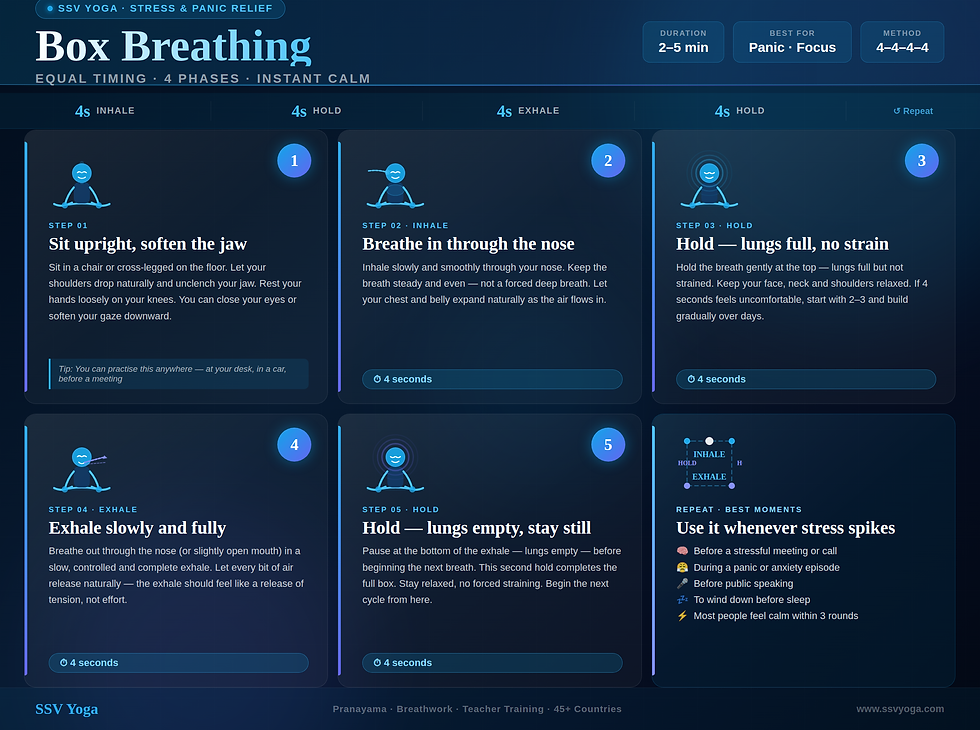
Step 1: Sit Comfortably
Sit in a relaxed position where your shoulders and jaw can soften.
Step 2: Inhale Slowly
Breathe in through the nose for 4 seconds. Focus on a smooth inhale rather than a huge inhale.
Step 3: Hold Gently
Hold your breath for 4 seconds without straining. If this feels uncomfortable initially, reduce the count slightly.
Step 4: Exhale Slowly
Exhale through the nose or mouth for 4 seconds. The exhale should feel controlled and steady.
Step 5: Pause Again
Hold for another 4 seconds before beginning the next round. Repeat this cycle for 2-5 minutes.
Many beginners notice that their body begins relaxing within just a few rounds because the breath pattern becomes predictable and calming.
4-7-8 Breathing Technique for Sleep and Anxiety
Some breathing techniques work best during stress. Others work especially well at night.
The 4-7-8 breathing technique became extremely popular because many people use it to calm racing thoughts before sleep.
And for people dealing with anxiety-related sleep struggles, that can make a huge difference.
What Is the 4-7-8 Method?
This breathing pattern follows a simple structure:
Inhale for 4 seconds
Hold for 7 seconds
Exhale for 8 seconds
The longer exhale is what makes this technique especially calming.
When the exhale becomes slower and longer, the nervous system often begins shifting toward relaxation.
This is one reason why people search for 4-7-8 breathing for sleep, breathing for anxiety 4-7-8, and how to calm an anxious mind naturally, because this method is strongly connected with nighttime calmness.
How It Helps Anxiety and Sleep
According to the Sleep Foundation, slow breathing practices may support relaxation and improve sleep preparation by helping reduce stress activation.
Many people with stress or anxiety struggle to “switch off” mentally before bed. Their body feels tired, but their thoughts remain active.
The 4-7-8 method helps by:
Slowing mental stimulation
Encouraging a slower breathing rhythm
Supporting relaxation response
Creating focus away from overthinking
How to Practice 4-7-8 Breathing Correctly
One common mistake beginners make is trying too hard. This practice should feel gentle and calming, not forced.
Here is a safer, beginner-friendly approach:

Step 1: Sit or lie down comfortably.
Step 2: Inhale softly through the nose for 4 seconds.
Step 3: Hold gently for 7 seconds only if comfortable.
Step 4: Exhale slowly for 8 seconds.
The long exhale matters more than “perfect counting.”
If the full timing feels difficult initially, reduce the numbers slightly while maintaining the same ratio. Remember, consistency matters more than intensity.
Nadi Shodhana Breathing for Emotional Balance
If your thoughts feel scattered or emotionally overwhelming, nadi shodhana breathing can feel incredibly grounding. This technique is often practiced to create balance between the mind and body.
What Is Nadi Shodhana?
Nadi Shodhana translates to “channel purification” in yogic traditions.
It is another form of alternate nostril breathing that focuses heavily on balance, awareness, and nervous system regulation.
Unlike rapid breathing practices, this method encourages patience and steadiness.
How Nadi Shodhana Helps Calm the Mind
People often search for nadi shodhana for anxiety and the benefits of nadi shodhana because this technique is deeply associated with calmness and mental clarity.
Regular practice may help:
Reduce overthinking
Improve concentration
Support emotional regulation
Encourage mindfulness
Create inner steadiness
The slow and controlled rhythm helps interrupt stress-driven breathing patterns.

Beginner's Guide to Nadi Shodhana
If you are new to this practice, avoid trying to “perfect” the breath immediately. Instead:
Focus on smooth breathing
Keep your shoulders relaxed
Avoid breath strain
Practice consistency over intensity
This approach makes pranayama for beginners much safer and more sustainable.
Bhramari Pranayama (Humming Bee Breath)
Among all yogic breathing techniques, Bhramari feels especially unique because sound itself becomes part of the calming process.
This practice uses humming vibrations during exhalation, which many people find deeply soothing.
Why Humming Breath Calms the Brain
During bhramari pranayama, you create a soft humming sound while exhaling slowly. That vibration may help reduce overstimulation and improve internal focus. People often search:
humming breathing benefits
bhramari for anxiety
yoga breathing for panic and anxiety
Because this technique feels grounding during mentally overwhelming moments. The humming sound can also help reduce external distractions by drawing attention inward.
Benefits of Bhramari for Anxiety
This practice may help:
Calm emotional overwhelm
Reduce mental agitation
Support focus
Encourage sleep readiness
Improve relaxation response
Many practitioners describe Bhramari as one of the fastest ways to create a sense of internal quietness after a stressful day. It is especially helpful for:
Overthinking
Emotional stress
Nervous system fatigue
Mental overstimulation
Step-by-Step Bhramari Practice

Step 1: Sit Comfortably
Keep the spine relaxed but upright.
Step 2: Inhale Slowly
Take a smooth breath in through the nose.
Step 3: Exhale With a Humming Sound
While exhaling, create a gentle humming vibration like a bee sound.
Step 4: Focus on the Vibration
Instead of thinking about stress, focus attention on the sound and sensation.
Step 5: Repeat Slowly
Practice for 5-10 rounds.
The goal is not loudness. The goal is steadiness and vibration awareness.
Many beginners notice that this technique creates immediate calmness because it combines breath, sound, and mindfulness.
Diaphragmatic and Belly Breathing for Stress Relief
One of the biggest problems with anxiety is shallow chest breathing.
When stress rises, many people unconsciously breathe into the upper chest rather than the diaphragm. This often keeps the body in a heightened stress response.
That is why diaphragmatic breathing and belly breathing are considered foundational practices for nervous system regulation.
What Is Diaphragmatic Breathing?
Diaphragmatic breathing focuses on deep, slow breathing into the lower lungs and abdomen rather than short chest breathing. This is why it is also called:
Belly breathing
Deep breathing
Abdominal breathing
People searching for belly breathing for anxiety, deep breathing exercises, and deep breathing techniques for nervous system regulation are usually looking for ways to slow down physical stress responses naturally.
Belly Breathing vs Chest Breathing
Understanding the difference matters because many anxious breathing patterns happen automatically.
Belly Breathing | Chest Breathing |
Slower rhythm | Faster rhythm |
Uses diaphragm | Uses upper chest |
Encourages relaxation | Often linked with stress |
Supports deeper oxygen flow | Can feel shallow and tight |
Helps nervous system calm down | Keeps body more activated |
Chest breathing itself is not “wrong,” but during chronic stress, it often becomes excessive and unconscious.
How to Practice Deep Belly Breathing

Step 1: Lie Down or Sit Comfortably
Relax the shoulders and jaw.
Step 2: Place One Hand on the Belly
Place the second hand on the chest.
Step 3: Inhale Slowly Through the Nose
Allow the belly to rise naturally.
Step 4: Exhale Slowly
Feel the belly soften as the breath leaves.
Step 5: Repeat Slowly
Practice for 5-10 minutes.
The goal is not massive breathing. The goal is natural diaphragmatic movement.
This is one reason why deep breathing exercises for anxiety and stress are often recommended for beginners; they are simple, accessible, and effective.
Which Breathing Technique Is Best for Your Goal?
Many people ask: “What is the best breathing technique for anxiety?”
But the truth is, different practices support different goals.
Some methods work best during panic.
Some help with emotional grounding.
Some support sleep and recovery.
Others improve focus and mental steadiness.
Here’s a simplified comparison to help you choose more clearly.
Goal | Best Technique |
General anxiety relief | Anulom Vilom |
Panic attacks and overwhelm | Box Breathing |
Sleep and nighttime anxiety | 4-7-8 Breathing |
Overthinking and mental noise | Bhramari |
Deep relaxation and nervous system support | Belly Breathing |
Emotional balance and focus | Nadi Shodhana |
This comparison helps simplify the overwhelming amount of information people often see online about the best breathing techniques for anxiety and stress.
The most effective technique is usually the one you can practice consistently and comfortably.
How to Start Breathwork Safely as a Beginner
One of the biggest misconceptions about breathwork is that deeper or faster always means better.
That is not true.
In fact, aggressive breathing too early can sometimes create dizziness, chest tightness, discomfort, or emotional overwhelm, especially for beginners who already deal with stress or anxiety.
This is why starting slowly matters. If you are completely new to breathwork for anxiety or pranayama, focus on consistency and awareness first rather than intensity.
How to Start Breathwork Safely as a Beginner
One of the biggest misconceptions about breathwork is that deeper or faster always means better.
That is not true.
In fact, aggressive breathing too early can sometimes create dizziness, chest tightness, discomfort, or emotional overwhelm, especially for beginners who already deal with stress or anxiety.
This is why starting slowly matters.
If you are completely new to breathwork for anxiety or pranayama, focus on consistency and awareness first rather than intensity.
Start Slowly and Stay Consistent
You do not need hour-long sessions to experience benefits. Even a few minutes daily can begin improving your awareness of breathing patterns.
A good beginner routine may look like:
5 minutes in the morning
5 minutes before sleep
Short calming sessions during stressful moments
That alone can create meaningful changes over time. The nervous system responds better to regular practice than to occasional intense sessions.
Avoid Aggressive Breath Retention Initially
Breath retention is common in many pranayama systems, but beginners should approach it carefully.
Many people try to copy advanced breathing tutorials online without understanding their current capacity. That can lead to:
Lightheadedness
Breath strain
Anxiety spikes
Headaches
Chest discomfort
If you are new, focus first on:
Smooth breathing
Relaxed rhythm
Controlled exhalation
Breath awareness
Longer breath retention can develop gradually later with proper guidance.
Create a Daily Breathwork Routine
The best breathwork routine is the one you can realistically continue. A simple structure works far better than an overly complicated schedule that becomes stressful itself.
Morning Practice
Morning breathing practices can help create mental clarity before the day begins. Techniques like:
Anulom Vilom
Belly breathing
Nadi Shodhana
Work well because they feel steady and grounded.
Midday Reset
During work stress or overstimulation, shorter practices help interrupt tension. This is where:
Box breathing
Deep diaphragmatic breathing
Slow exhale breathing
can help calm the nervous system quickly. Many professionals now use breathing exercises for office stress relief because they can be done almost anywhere.
Nighttime Relaxation
If anxiety becomes stronger at night, calming practices before sleep can help the body transition into rest mode. This is where:
4-7-8 breathing
Bhramari pranayama
Gentle belly breathing
Often feel most effective.
Consistency matters more than perfection. Even 10 minutes daily can become a meaningful wellness practice over time.
When to Stop or Modify Practice
Breathwork should feel grounding, not overwhelming. If you experience:
Dizziness
Severe discomfort
Chest pain
Panic intensification
Excessive breath strain
Pause the practice and return to natural breathing. Gentle breathing should feel calming and sustainable.
And if you have underlying medical or respiratory conditions, professional guidance is important before beginning advanced practices.
How to Start Breathwork Safely as a Beginner
One of the biggest misconceptions about breathwork is that deeper or faster always means better.
That is not true.
In fact, aggressive breathing too early can sometimes create dizziness, chest tightness, discomfort, or emotional overwhelm, especially for beginners who already deal with stress or anxiety.
This is why starting slowly matters.
If you are completely new to breathwork for anxiety or pranayama, focus on consistency and awareness first rather than intensity.
Start Slowly and Stay Consistent
You do not need hour-long sessions to experience benefits. Even a few minutes daily can begin improving your awareness of breathing patterns.
A good beginner routine may look like:
5 minutes in the morning
5 minutes before sleep
Short calming sessions during stressful moments
That alone can create meaningful changes over time. The nervous system responds better to regular practice than to occasional intense sessions.
Avoid Aggressive Breath Retention Initially
Breath retention is common in many pranayama systems, but beginners should approach it carefully.
Many people try to copy advanced breathing tutorials online without understanding their current capacity. That can lead to:
Lightheadedness
Breath strain
Anxiety spikes
Headaches
Chest discomfort
If you are new, focus first on:
Smooth breathing
Relaxed rhythm
Controlled exhalation
Breath awareness
Longer breath retention can develop gradually later with proper guidance.
Create a Daily Breathwork Routine
The best breathwork routine is the one you can realistically continue. A simple structure works far better than an overly complicated schedule that becomes stressful itself.
Morning Practice
Morning breathing practices can help create mental clarity before the day begins. Techniques like:
Anulom Vilom
Belly breathing
Nadi Shodhana
Work well because they feel steady and grounded.
Midday Reset
During work stress or overstimulation, shorter practices help interrupt tension. This is where:
Box breathing
Deep diaphragmatic breathing
Slow exhale breathing
can help calm the nervous system quickly. Many professionals now use breathing exercises for office stress relief because they can be done almost anywhere.
Nighttime Relaxation
If anxiety becomes stronger at night, calming practices before sleep can help the body transition into rest mode. This is where:
4-7-8 breathing
Bhramari pranayama
Gentle belly breathing
Often feel most effective.
Consistency matters more than perfection. Even 10 minutes daily can become a meaningful wellness practice over time.
When to Stop or Modify Practice
Breathwork should feel grounding, not overwhelming. If you experience:
Dizziness
Severe discomfort
Chest pain
Panic intensification
Excessive breath strain
Pause the practice and return to natural breathing. Gentle breathing should feel calming and sustainable.
And if you have underlying medical or respiratory conditions, professional guidance is important before beginning advanced practices.

Can Breathwork Really Help Anxiety and Stress?
This is one of the most common questions people ask. And honestly, the answer deserves balance.
Breathwork is not a magical cure for anxiety or stress. But it can become a powerful support tool when practiced consistently and correctly.
The reason breathwork feels effective for many people is that it works directly with physical stress responses rather than only mental distraction.
When anxiety rises, your body changes first:
Breathing becomes shallow
Heart rate increases
Muscles tighten
Thoughts accelerate
Breathwork helps interrupt that cycle.
What Research Says About Breathwork and Stress
Scientific interest in breathing practices has grown significantly over the last decade.
Research published through Stanford University and other institutions continues exploring how slow breathing influences emotional regulation, stress recovery, and nervous system balance.
A Stanford study found that structured cyclic sighing breathwork practices may improve mood and reduce anxiety more effectively than mindfulness meditation alone in some participants.
Breathwork and Cortisol Regulation
Chronic stress often keeps cortisol levels elevated for long periods.
Slow breathing practices may support the body’s relaxation response by helping reduce stress activation patterns.
That is why people now increasingly search:
breathing to lower cortisol
breathing exercises for emotional stress
calming breathing techniques for stress relief
Because controlled breathing creates a direct physiological shift.
Why Consistency Matters More Than Intensity
Many people expect an immediate transformation from one breathing session. But breathwork works more like physical training.
One session may create temporary calmness. Consistent practice builds stronger nervous system regulation over time.
The goal is not to “escape stress forever.”The goal is to improve how your body responds to stress when it appears.
And that difference matters.
Online Breathwork and Pranayama Training with SSV Yoga
Watching random breathing videos online can introduce techniques, but structured learning creates a much deeper understanding. That is especially important when practices involve:
Nervous system regulation
Emotional balance
Pranayama
Breath retention
Mindfulness
This is where guided training becomes valuable.
Learn Traditional and Modern Breathwork Techniques
Through SSV Yoga pranayama training, you can explore both ancient yogic breathing systems and modern nervous-system-focused breath awareness practices. The online teacher training includes understanding:
Traditional pranayama methods
Breath awareness
Mind-body connection
Meditation integration
Yogic philosophy behind breathing practices
Instead of simply copying techniques, you begin to understand why they work and how to practice them safely.

Flexible Online Learning for Beginners and Teachers
Can you become a yoga teacher online? The answer is a big yes! One major advantage of online learning is flexibility. You can revisit sessions, learn gradually, and practice consistently from home. This is especially useful for:
Beginners
Working professionals
Wellness coaches
Yoga teachers
People managing stress or burnout
Many people now search for:
online breathwork classes
breathwork course online
online yoga and breathwork course
Because accessible learning has become increasingly important. With SSV Yoga, you can practice at your own pace while still receiving structured guidance.
Breathwork Inside SSV Yoga Teacher Training Programs
Breathwork and pranayama are integrated throughout:
These programs do not focus only on yoga postures.
They also help you understand:
Nervous system awareness
Breath-led mindfulness
Emotional regulation practices
Traditional yogic breathing principles
Holistic wellness education
Still in doubt about why choose SSV Yoga Online? Read our guide to know the differentiator. This deeper understanding is especially valuable if you want to eventually teach yoga or guide others safely.
Final Thoughts: Your Breath Can Change Your State
Your breath changes constantly throughout the day.
When stress rises, breathing changes.When fear rises, breathing changes.
When the mind feels calm, breathing changes too.
That connection is powerful.
And once you begin consciously working with the breath, you begin to understand how deeply it influences your emotional and physical state.
FAQs
Can breathwork help calm an overactive nervous system?
Yes. Breathwork can help calm an overactive nervous system by slowing the breath and activating the body's relaxation response. Techniques such as Anulom Vilom, Nadi Shodhana, and diaphragmatic breathing may reduce stress, improve emotional regulation, and help the body shift away from a constant fight-or-flight state. Regular practice can support greater calm, focus, and resilience.
What is the best breathing technique for reducing cortisol naturally?
There is no single best technique, but slow breathing practices such as diaphragmatic breathing, Nadi Shodhana, and the 4-7-8 method are commonly used to support stress management. These techniques may help reduce nervous system activation and promote relaxation, which can contribute to healthier cortisol regulation over time when practiced consistently.
Can breathwork release stored stress and emotions?
Breathwork may help release physical tension and emotional stress by increasing awareness of how the body responds to pressure and overwhelm. Many people report feeling calmer, more grounded, and emotionally balanced after regular practice. Techniques such as Bhramari, belly breathing, and guided breathwork can support relaxation and emotional well-being.
How often should you practice breathwork for anxiety and stress?
Most beginners can start with 5 to 10 minutes of breathwork daily. Consistent practice is generally more effective than occasional longer sessions. Techniques such as Box Breathing, Anulom Vilom, and diaphragmatic breathing can be practiced in the morning, during stressful situations, or before sleep to help support anxiety and stress management.
Is breathwork better than meditation for anxiety?
Breathwork and meditation both help manage anxiety, but they work differently. Breathwork focuses on regulating the body's physical stress response through controlled breathing, while meditation trains attention and awareness. Many people find breathwork helpful for immediate calming effects, whereas meditation often supports long-term mental clarity and emotional balance.
Disclaimer: This content is for informational purposes only and is not intended as medical advice. Please consult a qualified healthcare professional before making any changes to your health or wellness routine.


Comments